
Andy Reakes, Chief Operating Officer at JIB and ECS, looks at the vital role electrical skills will play in establishing a ‘green’ economy in the future.
The UK’s commitment to achieving net zero carbon emissions by 2050 is an environmental necessity and a significant driver of economic growth.
A report by the Confederation of British Industry (CBI), The Future is Green, highlights that the net zero economy has grown by 10% during the past year, contributing £83.1 billion in Gross Value Added (GVA) and supporting about 951,000 full-time jobs.
The rapid increase in renewable energy, smart grid technology, and energy-efficient infrastructure demands a highly competent workforce capable of delivering safe, reliable and innovative solutions.
The government’s recent announcement of a £14.2 billion investment in the construction of the Sizewell C nuclear power station illustrates how crucial this is to meet the UK’s future energy needs. The correlation between skills, safety, and productivity is evident, prompting industry-wide discussions about competency frameworks.
Ensuring quality, safety, and productivity
A successful transition to a green economy requires workers with more than basic qualifications. The Building Safety Regulator (BSR) emphasises this need for competency-based standards across the construction and electrotechnical sectors. For safety and efficiency, professionals require robust training – evidenced by industry-recognised certification arrangements, such as the Electrotechnical Certification Scheme (ECS).
Competency in electrical work goes beyond technical know-how. It requires the ability to ensure that systems operate safely and efficiently, maximising sustainability and minimising risk.
The tragic consequences of past failures, in safety and training, prompted regulatory bodies to stress the importance of structured competence frameworks developed and recognised by relevant industry stakeholders.
Electrical professionals must meet stringent standards, particularly in environments with elevated risk, such as high-rise residential buildings, industrial developments and during the construction of care homes and hospitals.
The ECS approach, developed in consultation with industry, recognises continuing professional development (CPD) and structured training pathways. This assures a workforce capable of delivering on safety, efficiency and innovation and includes all areas linked to the development of the green economy.
The pitfalls of quick-fix training solutions
As the need for electrical professionals grows, there could be a temptation to turn to quick-fix training solutions to meet this demand. Such accelerated programmes lack the depth of knowledge, experience and behaviours to achieve true competence – as defined and required by industry consensus.
Only comprehensive vocational training and assessment can deliver a workforce capable of handling complex and safety-critical installations.
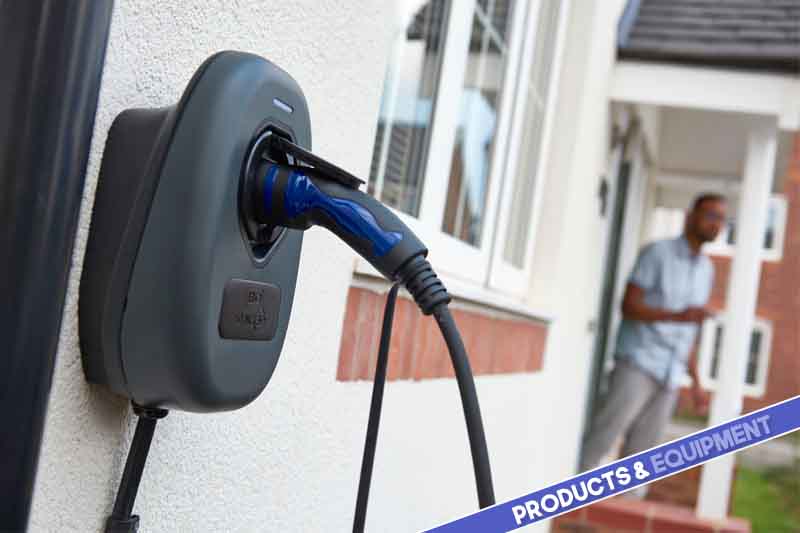
Inadequate regulation and oversight from clients, consultants and main contractors, in the areas of solar photovoltaics (PV) and EV charge point installations, have resulted in installations posing a danger to end users and the general public.
In 2022, the Centre of Excellence for Low Carbon and Fuel Cell Technologies (CENEX) compiled a report for the Office for Zero Emission Vehicles (OZEV).
Of 371 audits undertaken on EV charge points, 18% of these were potentially dangerous in one or more categories with only 32% recorded as satisfactory. The report detailed failures to follow BS 7671 Requirements for Electrical Installations (IET Wiring Regulations) and the IET Code of Practice for Electric Vehicle ChargePoint Equipment Installation.
A follow up report from City & Guilds concluded that, broadly, training for EV charge point installations had not delivered the necessary expertise, knowledge and experience to undertake this work safely. Indeed, City & Guilds warns that ignoring structured skills development is akin to neglecting national infrastructure – as both lead to breakdowns, inefficiencies, and increased risks.
To combat this, electrical industry bodies – including the Electrotechnical Skills Partnership (TESP), of which the Joint Industry Board (JIB) is a member – advocate robust personnel certification as one key element of effective competence assurance. Professionals must meet the highest safety and technical standards before entering the workforce and then maintain these standards thereafter.
TESP states: “Adequate understanding of electrical scientific theory and principles and demonstrable occupational competence are critical for the safe installation of technologies such as solar photovoltaic (PV) panels, battery storage systems and electric vehicle charging points (EVCP). The core competence of a qualified electrician is the foundation from which to upskill and train in these areas.”
Competency and sustainability
Increased skills, improved safety, and enhanced productivity are crucial components to achieve the UK’s sustainability goals and economic resilience. A competent workforce reduces costly errors, improves efficiency, and meets regulatory compliance.
For example, ECS electrician gold card holders, with the appropriate upskilling qualifications, will secure the reliability of renewable energy installations, the efficiency of electrical grids, and the safe operation of energy-efficient buildings.
In The Future is Green, the CBI sets out how skilled jobs in the net zero economy generate higher wages, benefiting individuals and contributing to economic growth. The productivity boost from a highly competent workforce supports industry-wide innovation, helping the UK maintain its competitive advantage in clean technology markets.
In areas such as Wales, Yorkshire, and the West Midlands, net zero industries have become economic powerhouses, demonstrating that investment in high-skill jobs translates into economic success.
By ensuring that all electrotechnical professionals are trained and certified to the most stringent standards, the UK can further accelerate this progress, creating a workforce capable of meeting today’s challenges and driving future innovation.
Skills development for the green transition
The JIB Skills Development Fund provides funding opportunities for qualified electricians seeking to expand their expertise in areas such as EV charge point installation, solar photovoltaics, and battery storage. Individuals working for JIB companies can access the financial support towards industry-recognised qualifications which align with industry competence frameworks, ensuring they meet the highest standards.
ECS also approves low-carbon qualifications which uphold safety, technical excellence, and regulatory compliance. These align with industry-wide standards, such as the Electrotechnical Assessment Specification and TESP’s Electrician Plus, to promote the continuing professional development of electricians in emerging green technologies.
By investing in structured training through approved schemes, electricians and their employers can future-proof their careers while contributing to the UK’s net zero ambitions safely and competently.
Long-term investment in competency
The transition to a green economy is an opportunity to drive growth and the role of electrical skills in this transformation cannot be overstated. Elevated competency standards result in safety, efficiency, and sustainability – all of which are critical to the success of net zero initiatives.
The UK must resist the temptation of quick-fix training solutions and initiatives which bypass baseline competencies – for example, attempting to repurpose people from installing smart meters one day to rapid EV charge points the next.
Instead, we need to invest in structured, industry-backed training programmes which align with regulatory frameworks – such as those established by the Building Safety Regulator and the electrical industry itself.
Through comprehensive competency development, the UK can secure a future that is not only greener but also safer, more productive, and economically resilient.
More information is available here
Find more industry features here