
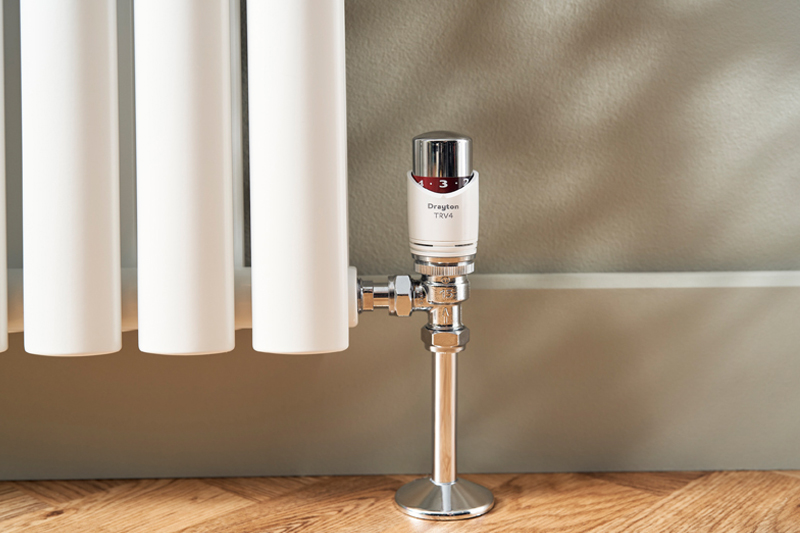
Drayton has revealed new analysis of Marginal Abatement Cost Curve (MACC) data, confirming that upgrading heating controls is one of the most cost-effective ways for households to cut carbon emissions and reduce energy bills.
MACC analysis assesses which energy-saving measures deliver the greatest carbon savings for the lowest installation cost. Drayton’s latest review compared heating controls – including thermostatic radiator valves (TRVs), auto-balancing TRVs and programmable thermostats – with measures such as loft and solid wall insulation.
The findings show standard TRVs deliver a marginal abatement cost of -£295 per tonne of CO₂e, while a Digistat programmable thermostat achieves -£275 and auto-balancing TRVs -£272. By comparison, solid wall insulation delivers -£46 per tonne and loft insulation -£81. A negative MACC value indicates the measure saves more money over its lifetime than it costs to install, making it a positive investment from day one.
Nick Hunt, UK Sales and Marketing Director at Drayton, said: “With ongoing cost-of-living pressures and growing demand for low-carbon solutions, the MACC findings highlight clear advantages for installers and homeowners.
“Compared with insulation, upgrading heating controls is quick and low disruption. Installers can deliver immediate bill savings and improved comfort, with strong upsell potential, particularly with auto-balancing TRVs.”
Drayton says the results demonstrate that traditional heating controls provide an accessible, lower-cost route to reducing carbon emissions while supporting wider Net Zero ambitions.
Find more industry news here