With rising energy costs, the UK Government’s Net Zero commitments and the rapid growth in consumer demand for all-electric living, the electrical installation landscape is being transformed at pace. Philip Grove, Product Manager for BG Circuit Protection, looks at why electrification is no longer a distant ambition but an active, accelerating shift that is reshaping how homes and small commercial premises use, generate and manage energy.
As transport, heating and energy generation continue to electrify, the role of the electrical installation itself is fundamentally changing. What was once a relatively static system designed around predictable loads is now evolving into a dynamic energy hub. EV chargers introduce sustained high current demand, heat pumps operate continuously rather than intermittently, and solar PV and battery storage systems create bi-directional power flows. At the same time, smart technologies and home-office equipment place greater emphasis on resilience, protection and future capacity.
For electrical contractors, this shift demands a rethink of traditional distribution arrangements. Designing solely to meet today’s requirements is increasingly short sighted, as customers are unlikely to stand still. A consumer unit that appears adequate at handover can quickly become a constraint as new circuits are added. Future-proofing is no longer about leaving a few spare ways ‘just in case’ – it is about installing distribution boards with the space, flexibility and adaptability needed to support electrification throughout the lifetime of the building. As a result, larger more versatile consumer units are becoming essential.
This growing complexity is also being reflected in regulatory expectations and customer awareness. Surge protection, discrimination, selectivity and resilience are no longer specialist considerations, but increasingly standard requirements in larger domestic and light commercial installations. End users are more informed and more likely to ask whether their electrical infrastructure is ‘EV ready’ or capable of supporting renewables in the future.
For contractors, specifying a consumer unit with sufficient capacity from the outset is becoming a mark of quality rather than excess. A well planned, spacious board reduces disruption, avoids unnecessary remedial work and demonstrates professional foresight – ensuring installations remain compliant, adaptable and fit for purpose as electrical demand continues to grow.

The rise of renewables
The electrical demands placed on UK homes and small commercial premises have changed dramatically in just the last decade. Where a traditional domestic installation may once have needed space only for lighting, sockets and a few dedicated loads, today’s consumer units must accommodate renewables like EV chargers, heat pumps, solar PV, battery storage as well as home office equipment and increasingly sophisticated smart-home technologies. As a result, electricians are routinely faced with the challenge of designing installations that aren’t just compliant today but are resilient, adaptable and spacious enough for the technologies their customers will want tomorrow.
Future-proof
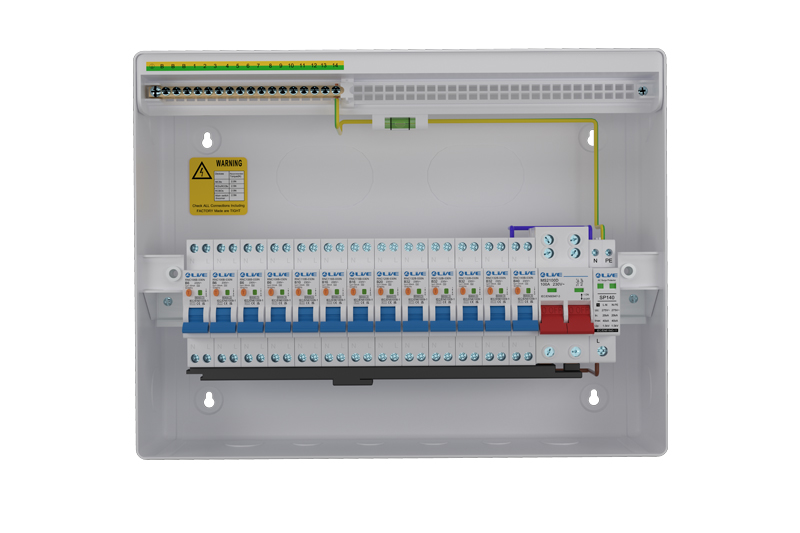
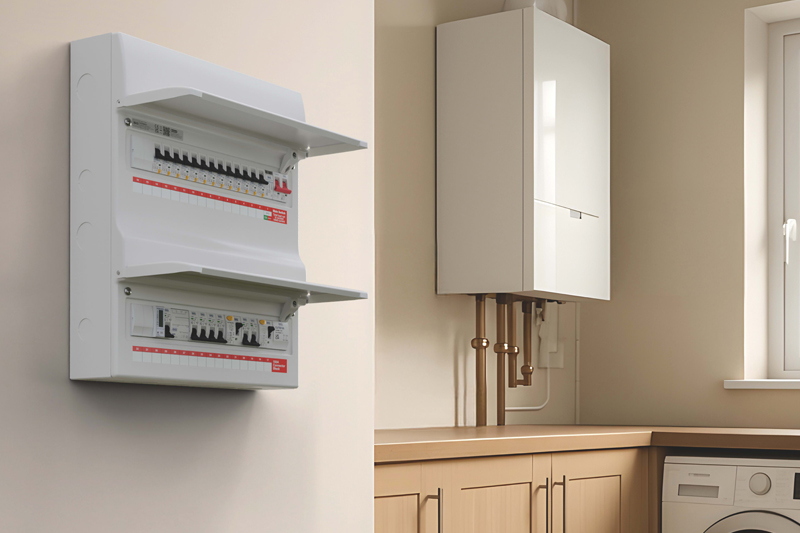
Designed not only for now but also for future demands, BG’s recently launched Dual Row Consumer Units, which are available in 36 way and 48 way boards, stand out as a practical and forward-thinking solution for both domestic and light commercial environments. Built for flexibility, efficiency and expansion, BG’s Dual Row Consumer Units offer greater circuit capacity, integrated surge protection and the ability to accommodate renewable energy interfaces and smart control modules. They are ideal for installations where future proofing is a priority.
Capacity where it counts
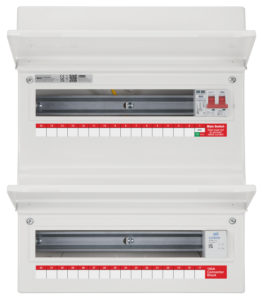
With 36 or 48 module options, BG’s Dual Row Consumer Units – both coming supplied with a 100A main switch and Type 2 surge protection as standard – can house multiple RCBOs and AFDDs along with other modular devices without overcrowding the unit. Being a dual row arrangement means that a higher circuit density is achieved without excessively increasing the size of the unit. This makes it ideal for utility rooms, garages, plant rooms or small commercial settings where wall space may be limited.
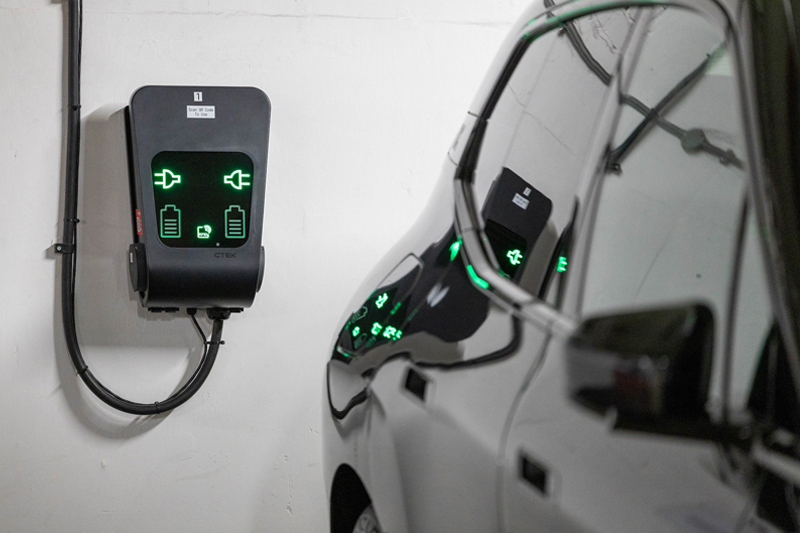
This extra capacity is crucial in modern installations. For example, a single EV charger can demand a dedicated 32A circuit, whilst a solar PV inverter requires its own protective devices and battery storage and heat pumps add further loads. Attempting to squeeze these into a traditional single row board often forces installers to bolt on extra enclosures later. This is untidy, inefficient and much harder to maintain.
With maximum adaptability built in, BG’s Dual Row Consumer Units feature four rows of enlarged oval knock-outs at the rear, complemented by additional versatile 40mm knock-outs on the sides, top, and bottom, whilst a new DIN rail design offers a stronger and more secure device engagement. The offset incomer, larger busbar cover, and updated label sheet provide a seamless installation experience for electricians.
Electrifying the future
The UK’s energy landscape is heading in one clear direction – more electrification, more distributed energy generation and more smart devices – and consumer units must be ready for that migration. Solutions such as BG’s Dual Row Consumer Units will allow electrical contractors to return in the future to add new circuits without having to rip out and replace an undersized unit or bolt together multiple units making for a messy, inefficient installation. Future-ready, BG’s 36 and 48 way dual row single unified and spacious boards are ready for whatever comes next and provide electricians with a board that not only meets today’s demands but also anticipates tomorrows.
Find out more here
Find more industry features here