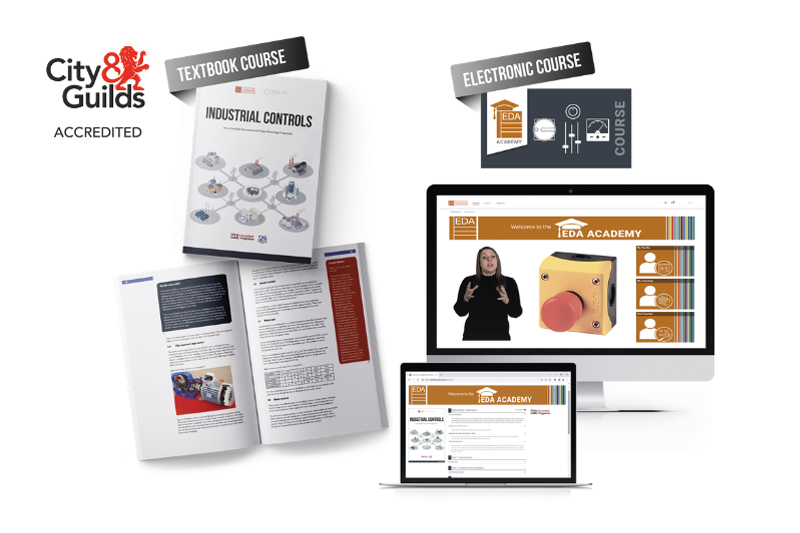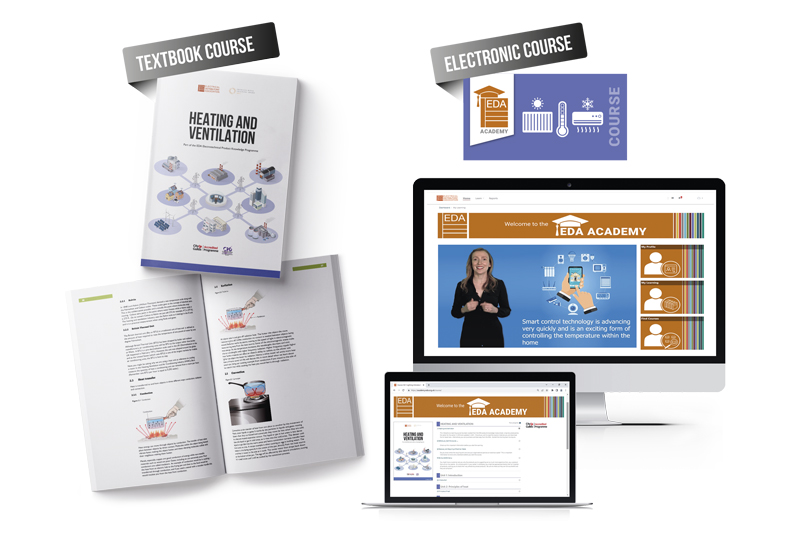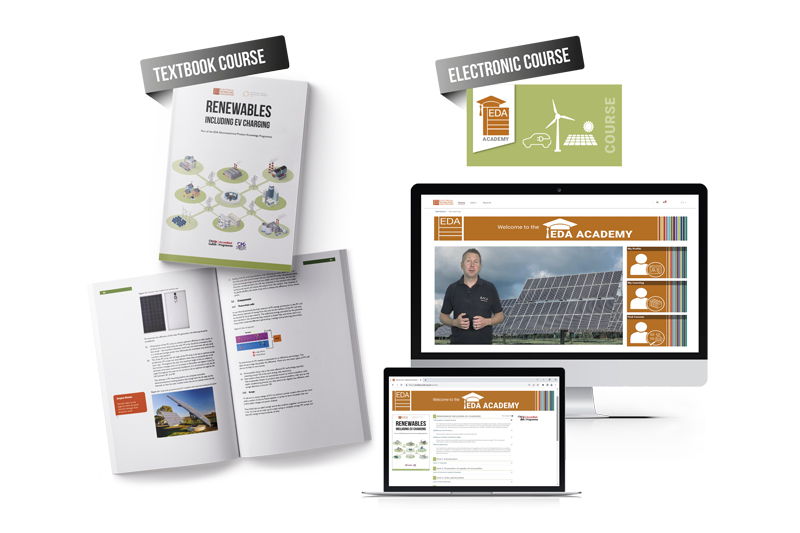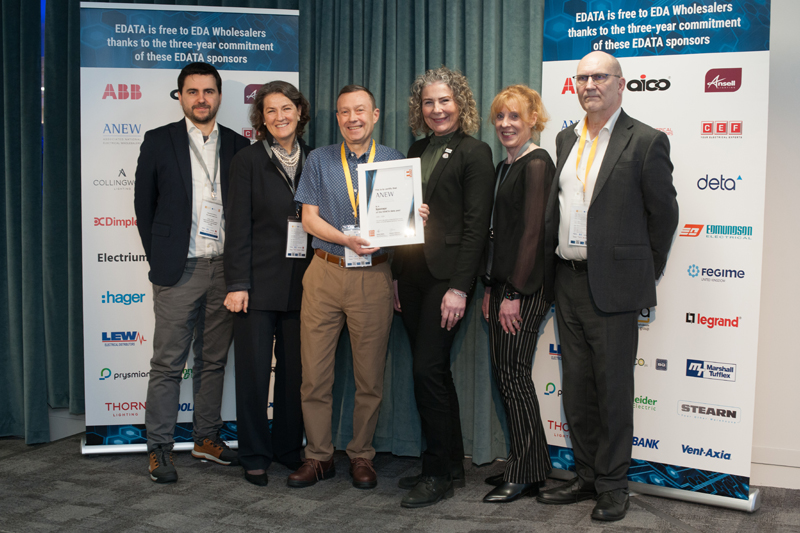
Setting the benchmark for professional skills development in the UK’s electrotechnical sector, the EDA’s Product Knowledge Modules help businesses like yours create cross-selling and up-selling opportunities by building knowledge and confidence. The Modules have won two Princess Royal Training Awards – in 2022 and again in 2025.
All 12 modules were created product experts from EDA businesses, pooling their knowledge for the good of the sector. The EDA Distribution, Switchgear and Protection training covers:
- Generation Transmission and Distribution
- Distributing Electricity within a Property
- Protection and Control Devices
- Additional Protection
- Supply and Metering
- Specialist Applications
The more you know, the more you sell
Speaking the same language as your customers means better business relationships, and more cross-selling and up-selling opportunities. Well-trained staff build trust and encourage repeat business: they listen carefully, ask the right questions, and explain solutions clearly. This reduces misunderstandings and makes customers feel valued and heard.
When customers see that an organisation invests in training, it signals professionalism, accountability, and a commitment to doing things right – especially important in technical or safety-critical sectors like ours.
Online learning through The EDA Academy
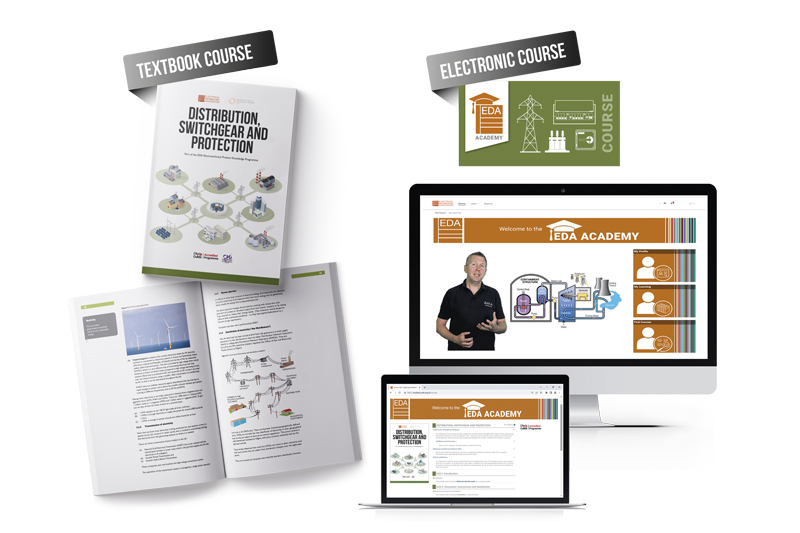
All the EDA Product Knowledge Modules are available to study electronically via The EDA Academy, the Association’s e-learning portal. Each training course is delivered through video and interactive learning, but if the original hard copy textbook is preferred, these are still available.
Years of knowledge
City & Guilds Accredited, these training courses harness decades of combined expertise from product experts at EDA manufacturers and allied trade associations to create an accessible and practical training opportunity for you and your team. EDA Product Knowledge modules are also CPD approved.
Test your knowledge
Have a go at the sample questions from the Distribution, Switchgear and Protection module. Then check your answers below. If the results show that you need to boost your team’s know-how, talk to the EDA today.
Sample questions
Q1: What is the name of the electricity industry regulator?
Q2: Explain the difference between Type A and Type B distribution boards.
Q3: What is embedded generation?
Q4: What type of meter must be used for billing purposes?
Q5: What are the consequences of a poor termination in a consumer unit?
Q6: Where would you use an RCD with an operating current of 500 mA?
Scroll down for answers
Answers
Q1: Ofgem (Office of Gas and Electricity Markets).
Q2: Type A has a busbar arrangement designed to accept single and/or double-pole overcurrent protection devices. They have a horizontal busbar arrangement that accepts multi-pole and/or single-pole overcurrent protection devices.
Type B has a busbar arrangement designed to accept multi-pole and/or single-pole overcurrent protection devices. They have a vertical busbar with the overcurrent protection devices connected to the sides.
Q3: Generation of electricity close to the end user of the power
Q4: Meters used for billing of electricity must be either MID approved or approved under UK National legislation.
Q5: Fire, circuit failure or unexpected operation of the circuit protective device
Q6: On a circuit supplying one or more socket-outlets of rating exceeding 32 A, or on a construction site.
How did you do?
Full marks: Well done.
3 – 5 out of 6: Not bad. Could the Wiring and Devices Product Knowledge Module help you to fill in any gaps in your knowledge and help you progress in your career?
Less than 3: The EDA Product Knowledge training could be just what you need to boost sales.
Watch the video and download the Course Directory
There’s plenty of information online at www.eda.org.uk including a video and a downloadable Course Directory giving you a summary of what’s covered in each of the 12 training modules.
The EDA team is ready to help. Call 020 3141 7350 or email training@eda.org.uk
For more information, click here
Find more ‘EDA Insight’ articles here