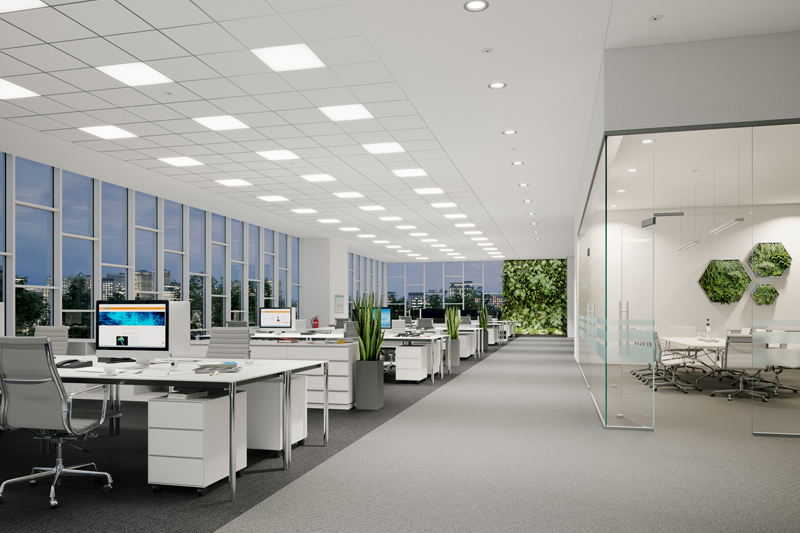
Nelo Neves, Managing Director at LEDVANCE UK, explains how the company is supporting better lighting through simple wireless control.
Lighting is increasingly expected to do more than provide basic illumination. It must support visual comfort, adapt to different activities and respond to changing conditions, while also helping to reduce energy use. As a result, lighting control is becoming a standard part of modern installations rather than a specialist addition.
LEDVANCE Direct Easy has been developed as a straightforward wireless control system that enables lighting to respond to how spaces are actually used, without adding complexity to installation or commissioning.
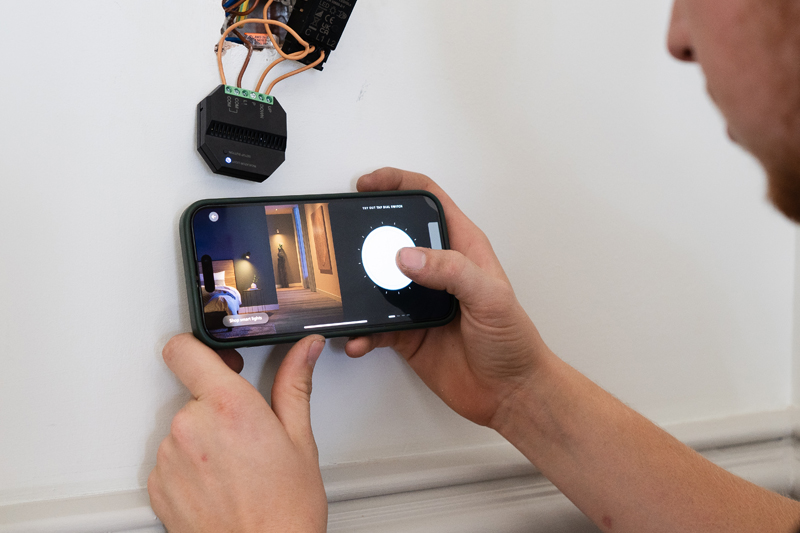
Direct Easy operates using Zigbee 3.0 wireless communication and is set up via Bluetooth using a smartphone app. This approach allows luminaires to be grouped and adjusted quickly, making it suitable for both new installations and refurbishment projects where layouts or occupancy patterns may change over time. Because no control wiring, gateways or cloud connections are required, lighting can be configured locally and adapted later without disruption, which is particularly useful in occupied buildings such as offices, schools and retail environments.
A broader range of customers
As wireless control becomes more common on everyday projects, having accessible systems that do not require specialist configuration helps wholesalers support a broader range of customers, from maintenance contractors to small commercial installers.
Once installed, up to 40 luminaires can be grouped within a zone, allowing lighting to be tailored to specific areas rather than treating entire spaces as a single lighting environment. This supports more even light distribution across working areas, while allowing circulation routes or peripheral zones to operate at lower levels. From a lighting quality perspective, this helps avoid over-lighting and improves visual comfort by reducing unnecessary brightness contrasts within a space.
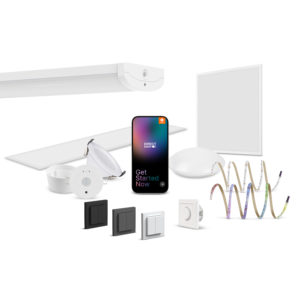
The system also supports daylight harvesting and presence detection, enabling lighting to respond automatically to available natural light and occupancy. When daylight levels are sufficient, luminaires dim to maintain consistent illumination, while unoccupied areas can be reduced or switched off entirely. This not only lowers energy consumption but also helps maintain stable visual conditions throughout the day, reducing the risk of glare or excessive brightness when daylight levels fluctuate. When combined, these features can deliver energy savings of up to 50% compared to LED installations without lighting control.
Direct Easy supports dimming, Tunable White and dynamic RGB control where compatible luminaires are used, allowing light levels and colour temperatures to be adapted to different tasks or times of day. In practical terms, this means cooler light can be used in task-focused environments to support concentration, while warmer tones may be more appropriate in social, hospitality or customer-facing spaces. This flexibility allows lighting to contribute to the overall function and atmosphere of a space, rather than remaining fixed at a single setting.
Visual comfort
The system is designed to work with Zigbee 3.0 compatible LEDVANCE luminaires, which offer high luminous efficacy and low flicker performance. High efficacy ensures required light levels are achieved with lower power consumption, while low flicker supports visual comfort, particularly in environments where people spend long periods under artificial lighting. Combining efficient luminaires with responsive control enables both lighting quality and operational efficiency to be addressed together as part of a single system.
Adaptability over the life of a building is also an important consideration. Direct Easy installations can remain as simple, locally controlled wireless systems, or they can be expanded and integrated into more comprehensive lighting management platforms if future requirements change. Because the system is based on open Zigbee 3.0 standards, upgrades can be achieved without replacing luminaires or control devices, supporting longer system lifecycles and more sustainable refurbishment strategies.
For wholesalers, installers and end-users, the move towards wireless control reflects a broader shift in the market towards lighting that is efficient, adaptable and responsive. Having accessible control solutions available alongside luminaires supports installers who are increasingly asked to deliver lighting that balances performance, comfort and energy efficiency across a wide range of everyday projects.
Discover more here
Find more industry features here