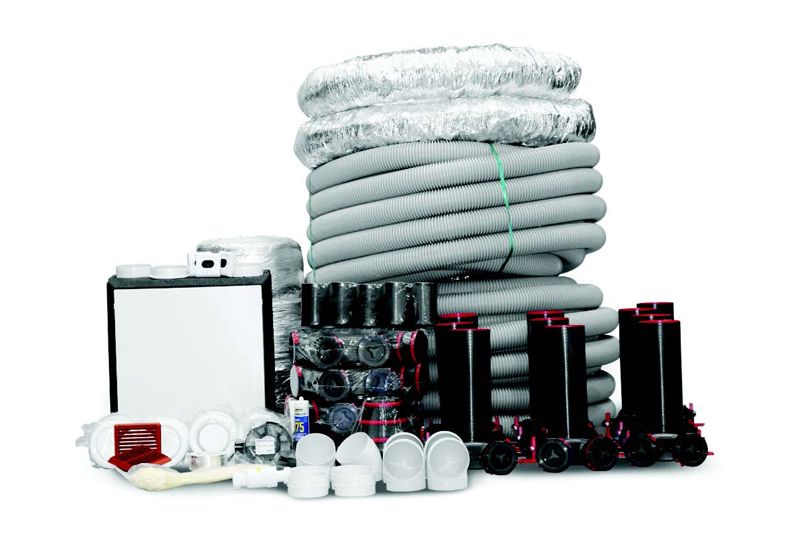
Ruth MacEachern, Product Manager at EnviroVent discusses PIV and MVHR and choosing the right ventilation strategy for healthier indoor environments
As awareness of indoor air quality continues to grow in line with new regulations like Awaab’s Law, ventilation is no longer viewed as a “nice to have” but a fundamental part of delivering healthy, compliant living spaces. Homes today are more airtight than ever, which brings energy efficiency benefits but also increases the risk of trapped pollutants, excess moisture, condensation, and indoor air quality issues if ventilation isn’t properly addressed.
Two of the most commonly specified whole‑house ventilation approaches in UK homes are Positive Input Ventilation (PIV) and Mechanical Ventilation with Heat Recovery (MVHR). While both are designed to improve indoor air quality, they work in very different ways and suit different property types and scenarios.
Understanding how each system functions and where it performs best is key to ensuring the right solution is specified for each home.
How PIV works
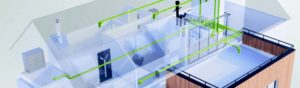
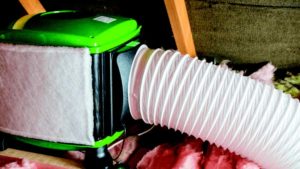
Positive Input Ventilation is a whole‑house system that works by gently supplying filtered air into the property, typically from the loft space. This continuous input of air creates a slight positive pressure inside the home, which helps to push stale, moisture‑laden air out through natural leakage points such as trickle vents, air bricks and gaps around doors and windows.
Rather than extracting air mechanically from individual rooms, PIV focuses on dilution and displacement. Pollutants such as excess humidity, odours, airborne allergens and everyday household contaminants are gradually forced out and replaced with filtered air.
Because the air is introduced at a low flow rate and filtered before entering the living space, modern PIV systems operate quietly and unobtrusively, providing background ventilation without relying on occupant interaction.
The indoor air quality and health benefits
PIV can play a particularly valuable role in reducing condensation, damp and mould, which remain some of the most common indoor air complaints in UK housing. Excess moisture generated from everyday activities such as cooking, showering and drying clothes can quickly build up in poorly ventilated homes, creating ideal conditions for mould growth and dust mite proliferation.
By constantly introducing drier external air, PIV helps to stabilise humidity levels across the entire dwelling, reducing surface condensation and limiting the conditions mould needs to thrive. This, in turn, supports better respiratory health, especially for occupants affected by asthma, allergies or other breathing conditions.
Unlike intermittent extract fans, which depend on manual operation or occupancy sensors, PIV systems run continuously, maintaining consistent air movement and improving overall air freshness throughout the home.
When PIV is the best option
PIV is particularly well suited to existing homes and retrofit scenarios, where installing a ducted ventilation system may be disruptive or impractical.
It is commonly specified in:
- Older properties with limited or inconsistent background ventilation
- Homes experiencing condensation or mould but without major structural defects
- Social housing and private rental properties where minimal disruption is important
- Occupied homes where residents need an immediate, low‑maintenance solution
Because installation requirements are relatively straightforward, PIV offers a cost‑effective and scalable way to address indoor air quality issues across large housing portfolios. Its simplicity, reliability and ease of upkeep make it a popular choice where a quick improvement in living conditions is required.
However, it’s important to recognise that PIV relies on the building’s natural leakage paths to expel air. As housing stock becomes increasingly airtight, this is where alternative strategies may be more effective.
Introducing MVHR
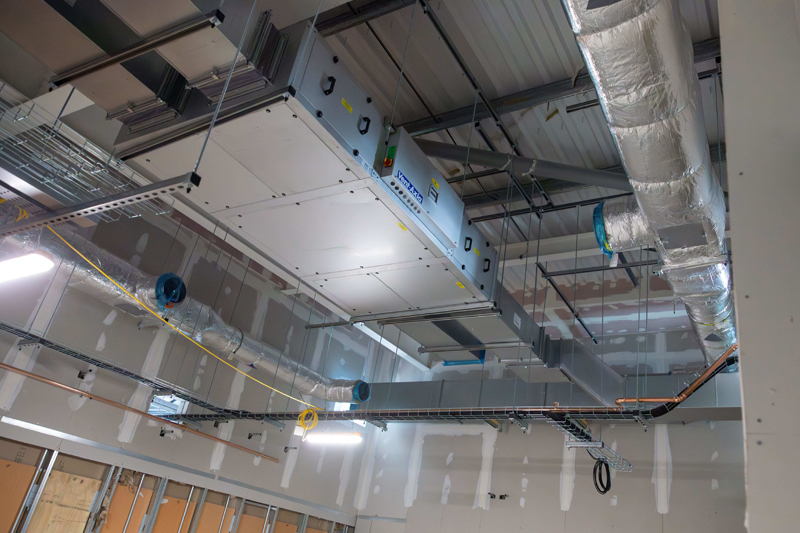
Mechanical Ventilation with Heat Recovery operates on a fundamentally different principle. Rather than supplying air into the property and allowing it to escape naturally, MVHR systems extract stale air from wet rooms such as kitchens and bathrooms, while simultaneously supplying fresh air to living and sleeping spaces via a fully ducted system.
What sets MVHR apart is its ability to recover heat from outgoing air. As warm, stale air is extracted, the heat is retained within the heat cell to pre‑warm the incoming fresh air, improving thermal efficiency while maintaining a continuous supply of air. This controlled, balanced airflow allows MVHR systems to manage indoor air quality with a high degree of precision.
Why MVHR delivers long‑term indoor air quality control
MVHR is particularly effective in airtight, modern properties, where uncontrolled air leakage is minimal and ventilation must be carefully managed.
Because air supply and extract rates are balanced, MVHR prevents pressure imbalances within the home, reducing draughts and helping maintain stable internal conditions. The continuous removal of humidity and pollutants directly from source rooms makes MVHR highly effective at reducing condensation and helping to protect the building fabric.
From an indoor air quality perspective, MVHR systems also offer excellent filtration, helping to reduce the ingress of outdoor pollutants and allergens, which are a growing consideration in urban environments.
When MVHR is the right choice
Under Approved Document F of Building Regulations, MVHR is suitable for a dwelling with any air permeability level, however MVHR is often suited to:
- New‑build homes designed to high airtightness standards
- Properties undergoing deep retrofit or whole‑house renovation
- Homes where energy efficiency and occupant comfort are key priorities
While installation is more complex than PIV, the long‑term benefits in terms of comfort, air quality control and energy performance make MVHR a strong choice where design conditions allow.
Choosing the right system
No single ventilation system is right for every property. The most effective solution depends on a range of factors, including:
- The age and airtightness of the building
- Existing ventilation pathways
- Occupant behaviour and lifestyle
- Budget, disruption tolerance and long‑term performance goals
In many existing homes, PIV provides a practical and accessible route to improving indoor air quality and reducing moisture‑related problems. In contrast, MVHR offers maximum control and efficiency for homes designed to support a fully ducted ventilation strategy.
What matters most is that ventilation is considered early, specified correctly, and matched to the realities of the building and its occupants. With indoor air quality now firmly on the agenda, choosing the right approach has never been more important.
Additional information is available here
Find more industry features here