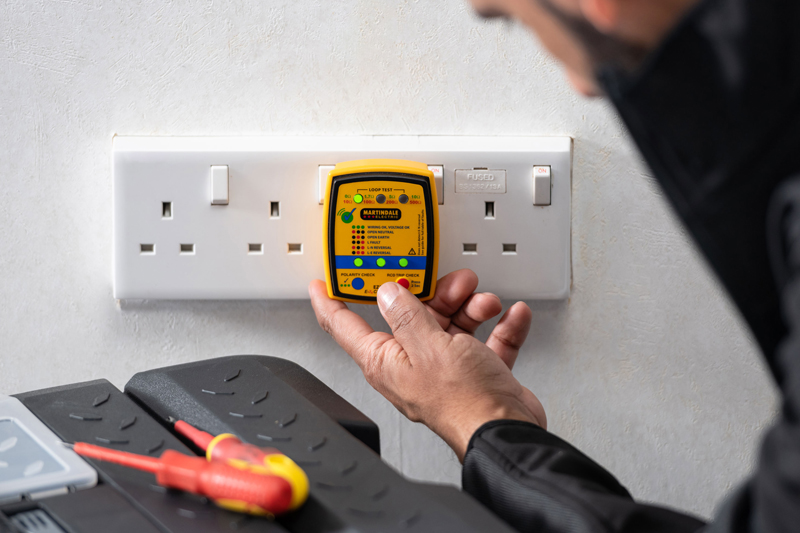
Socket testers are not an alternative to the formal verification of wiring installations, but as a first line indicator they are an essential tool, explains Steve Dunning, Managing Director at Martindale Electric.
When properly specified, socket testers provide a fast and effective solution to identifying potentially unsafe installation and wiring faults, particularly prior to installing new plant and equipment.
All socket testers should check that the earth, live and neutral are the right way round but with such a large number of proprietary plugin devices available, additional test functions can vary considerably. So, when selecting a socket tester, it’s important to understand the different types available and their capabilities and limitations.
Socket testers are categorised as either simple, advanced or professional with the key differentiator being the ability to measure and display either ranges or numerical values for earth fault loop impedance.
It is also worth bearing in mind that although many of these devices will indicate some of the basic electrical faults that may be found in socket-outlet circuits, some of the simpler versions cannot be relied on to indicate more advanced faults, which can be potentially dangerous.
These 10 pointers will help you help your customer select the right one for the job.
- There are so many socket testers available, what do I recommend?
Socket testers can be split into categories: simple, advanced and professional. All socket testers will check that basic connections have been made correctly; however, advanced/professional socket testers will have more functionality with respect to earth testing.
- So, which tests will a simple socket tester perform?
All testers check that a socket is functioning; this includes checking for live and earth reverse, live and neutral reverse and that there is earth connected. However, they do not check if the socket is adequately earthed for safety. Some offer added features. This may include a buzzer in addition to LEDs to indicate a good socket, or they may show a combination of indicators to identify which particular fault type is present.
- What is the difference between an advanced and professional socket tester?
The key differentiator is related to checking the effectiveness of the protective earth. More advanced testers indicate the value of loop impedance via LEDs (examples are the Martindale EZ165 and EZ365) or show numerical values. A reliable earth loop impedance measurement is essential to ensure that over-current protection devices achieve a fast enough disconnection time to avoid electrocution.
- I’ve heard there’s a test that no socket tester can perform. What is it, and why?
There is one fault that a socket tester and indeed no other piece of equipment can easily find, the swapping of the earth and neutral wires. This is because the earth and neutral are common at the substation (if not closer), so electrically, they are indistinguishable.
- What is the ‘supply reversed’ test on some socket testers?
This is a cross-polarity test. Although all socket testers are capable of identifying wiring faults at the socket, including live-neutral errors, they will not detect when the incoming supply polarity has been reversed. This serious fault condition where L-NE connections have been reversed at the supply and require a special additional test. The Martindale BZ701 has this feature.
- Will my socket tester test an RCD?
A socket tester will only check the functionality of an RCD in a circuit i.e. the ability to trip. RCD testing requires the use of a tester or multifunction installation tester with RCD test capability which can measure time to trip.
- Does a socket tester help with 18th Edition installation testing?
It’s important to appreciate that socket testers are not an alternative to the full verification of wiring installations. For testing installations, professional loop testers and multifunction testers suitable for carrying out all the tests needed to verify the safety of domestic, commercial and industrial wiring installations (according to the 18th Edition Wiring Regulations) are required.
- In summary, what can I use a socket tester for?
A socket tester is a first-line indicator to identify potentially unsafe installations and wiring faults. Socket testers offer a fast and effective solution when properly specified. They can also be particularly useful as a service tool in identifying potentially unsafe conditions prior to carrying out work on existing electrical systems and equipment or before installing new appliances.
- I also need to check industrial outlets – can a socket tester help?
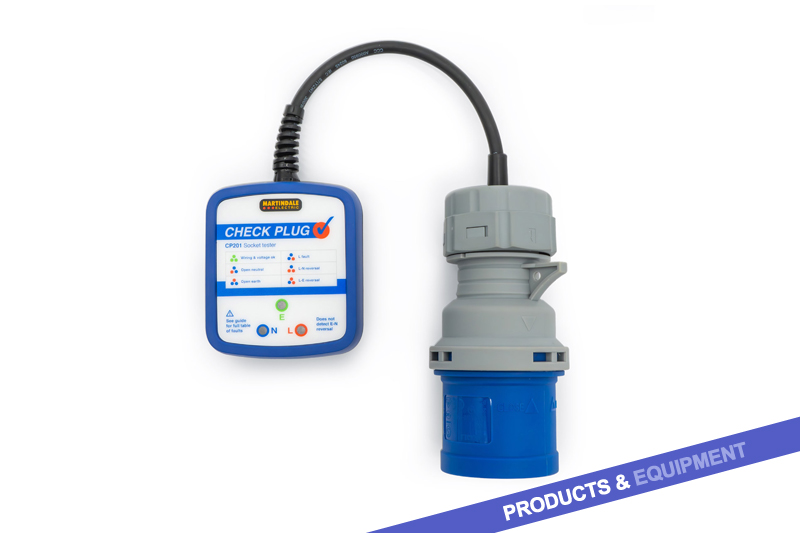
Manufacturers such as Martindale offer a full range of industrial socket testers, specifically for this application. These perform some of the basic tests similar to standard 13A socket devices but offer different pin configurations, different voltage levels and three-phase checks.
- Can socket testers help with EV chargers?
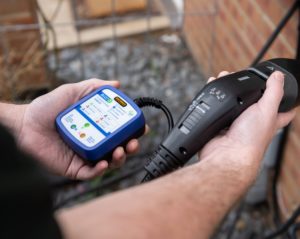
There is a new classification of socket tester capable of first line checking of EV charge points. The Martindale BZ820-EV is an example, being able to connect directly to a Type-2 EV charger to perform tests similar to a basic socket tester. It can also simulate connection to a vehicle for additional tests.
Conclusion
When it comes to the design of a socket tester, quality and durability should be key considerations. Testers should ideally feature a tough sculpted design for easy removal and be durable enough to withstand the roughest of handling, thus providing many years of performance.
Socket testers offer a fast and effective solution to identify potentially unsafe installations and wiring faults when correctly specified as a first-line indicator. They can also be helpful as a service tool in identifying potentially dangerous conditions before carrying out work on existing electrical systems and equipment. Selecting the right tester for the job is key.
The Electrical Safety-First Best Practice Guide 8 (version 2) Selection and Use of Plug In Socket Testing Devices is an excellent source of information.
For further details, click here
Find more industry features here