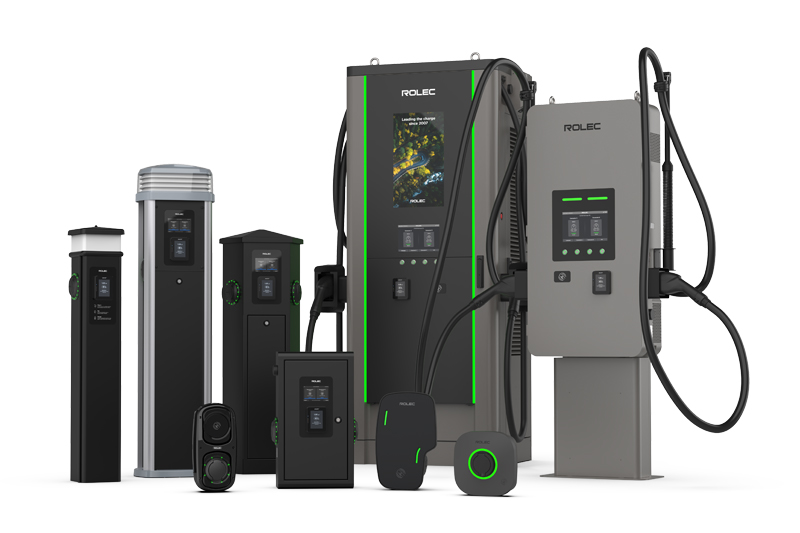
The EV industry is evolving at an unprecedented pace and navigating this rapidly changing landscape requires more than ambition; it demands expertise, partnership, and long-term thinking. Darren North, National Sales Manager for Rolec, looks at how EV Infrastructure is reshaping wholesale demand.
No longer a future-facing trend in the UK, electric vehicle adoption is now a day-to-day reality shaping specification decisions, stock profiles, and conversations at the trade counter.
For electrical wholesalers, EV charging has evolved from a niche category into a core part of electrical distribution, driven by installation demand across residential, commercial, and fleet environments.
As demand increases, so too does complexity. Charging speeds, site requirements, and system interoperability are key technical factors determining what gets specified, supplied, and installed.
For wholesalers, this shift is creating both opportunity and responsibility: the opportunity to grow margin-rich categories, and the responsibility to support installers with accurate, practical guidance.
For Rolec, an emphasis on collaboration and capability-building reflects the company’s long-term view of industry growth built on competence, consistency, and confidence.
Home or commercial use EV charging
When selecting an EV charger, there is no universal solution. Requirements differ significantly between domestic, workplace, fleet, and public charging environments, meaning wholesalers increasingly need to understand not just the products, but the applications they are designed for.
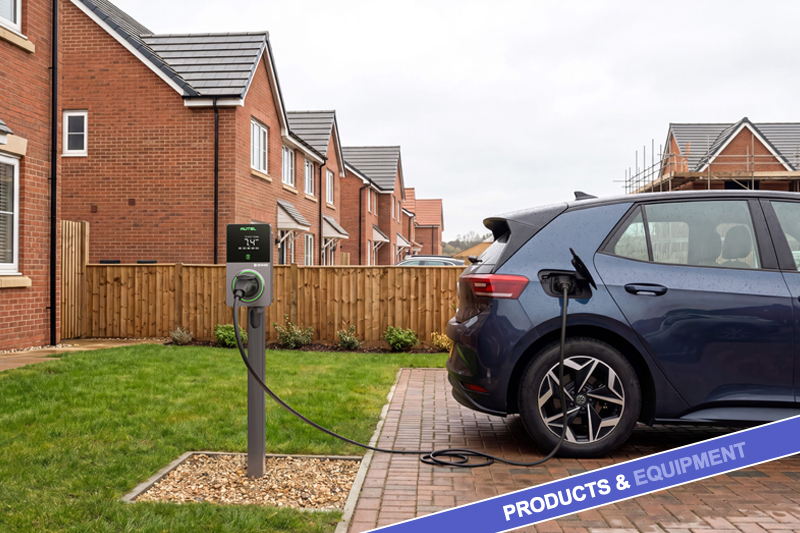
For home charging customers, price sensitivity remains a major consideration. Installers and end users are often looking for cost-effective solutions that combine compact, aesthetically pleasing units with dependable performance. Reflecting these priorities, Rolec’s EVO, ZURA, and BasicCharge ranges are designed to provide accessible home charging solutions that balance functionality, ease of installation, and affordability.
Commercial charging introduces a wider set of considerations, many of which directly influence installation complexity and long-term operational efficiency.
Location
Different charging environments require different hardware solutions. Workplace, public, residential, and fleet applications all present distinct operational demands. For example, exposed or high-traffic environments often require more robust infrastructure offering durability and vandal resistance.
Outlet options
Commercial sites are increasingly looking to maximise charging availability while minimising infrastructure costs. Dual and quad outlet units can help reduce groundwork, cabling, and installation time while increasing the number of charging outlets available on site. Multi-outlet solutions such as Rolec’s HEX charger are helping operators maximise charging availability from a single installation footprint.
Connectivity challenges
Reliable connectivity is essential for monitoring, billing, and access control. However, this can become challenging in underground car parks or remote locations where signal strength may be limited. To address this, Rolec’s charging solutions offer multiple connectivity options, including 4G, Wi-Fi, and Ethernet, ensuring chargers remain online 24/7.
Charging speeds
Charging speeds range from 7.4kW AC fast charging to ultra-rapid DC solutions up to 650kW, depending on application and site requirements. In commercial and fleet environments, operational efficiency is critical, with vehicle downtime, turnaround times, and site utilisation all key considerations.
Data management
The ability to extract and analyse data is becoming increasingly important for commercial operators. Access to detailed reporting, including energy consumption per vehicle, enables a clearer understanding of operational costs and fleet efficiency and chargepoint utilisation.
Innovation in EV infrastructure
Alongside growing demand, EV charging technology is evolving rapidly. The most significant innovations are not only about faster charging speeds, but also about smarter systems and energy management.
Load management
Load management has moved from an optional feature to a standard requirement. Dynamic load balancing is now frequently used to prevent overloading supply infrastructure, particularly in multi-charger set-ups. These systems allow several chargepoints to operate within available capacity by intelligently distributing power across a site.
Interoperability
OCPP (Open Charge Point Protocol) has become increasingly important in preventing vendor lock-in. Customers are actively seeking flexibility across networks and software platforms, rather than closed ecosystems. Rolec supports this approach with products designed to be natively OCPP compliant. The company currently works with more than 45 chargepoint management system (CPMS) partners worldwide.
Integrated software
The value of EV charging is no longer defined solely by hardware. Back-office platforms play a critical role in monitoring, billing, remote management, and energy optimisation, shifting purchasing decisions towards total system capability rather than unit price alone.
Growth in the wholesale channel
As EV charging continues to evolve, wholesalers are increasingly acting as knowledge hubs as much as stockists. Key priorities across the channel include staff training, installation knowledge, and dedicated manufacturer support for technical and specification queries. As installations become more varied and technically demanding, confidence at the counter is directly influencing orders.
In response, leading manufacturers are placing greater emphasis on knowledge transfer and channel engagement, an approach that sits at the foundation of Rolec’s strategy. This extends beyond product supply, supporting wholesalers and contractors throughout the project, from pre-sales enquiries and specification support through to quotation, onboarding, and handover.
This end-to-end approach reflects a broader industry shift towards collaboration across manufacturers, wholesalers, and installers, where successful delivery depends on technical understanding rather than product supply alone.
Rolec’s support is further reinforced through hands-on training, access to technical resources, and practical guidance on the latest system developments across EV infrastructure projects. With over 35 years of manufacturing experience, Rolec continues to develop its product range with a focus on reliability, flexibility, and ease of deployment across multiple applications.
Built on standards
As the EV charging market evolves, consistency, compliance, and operational discipline are becoming increasingly important to wholesalers and installers alike.
At Rolec, this commitment has been formalised through ISO certification, providing a structured framework across quality management, environmental responsibility, occupational health and safety, and energy management. Importantly, this does not introduce new intent; it strengthens and formalises practices already embedded across the business. It demonstrates that systems, processes, and controls are in place to meet recognised international standards, ensuring responsibility and efficiency are built into every stage of delivery.
For customers, this is more than a certification, it is confidence and consistency.

A category moving into maturity
EV charging is no longer an emerging add-on category for electrical wholesalers; it has become a core part of their renewables and electrification offering.
As charging technology becomes more advanced, the role of the wholesaler is also evolving. Those who adapt fastest to this shift will not only capitalise on growing demand but also help define the delivery of EV infrastructure across the UK.
Further details can be found here
Find more industry features here