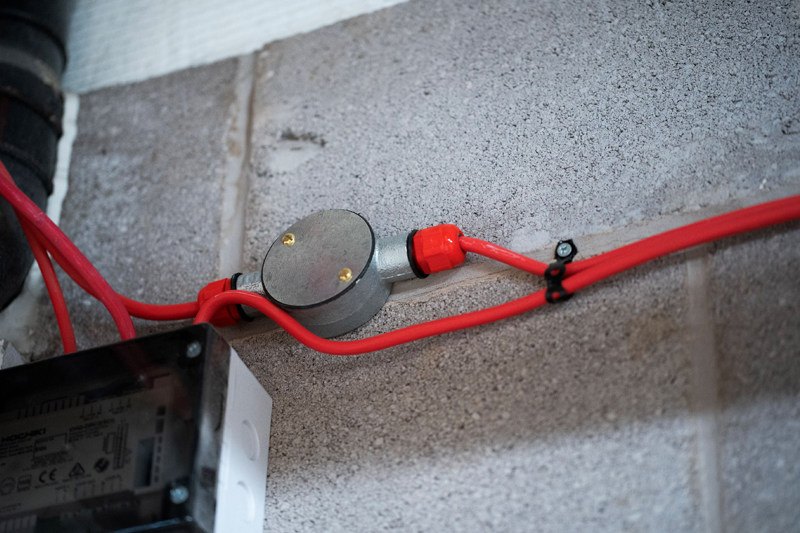
Jake Green, Head of Technical Engagement with Scolmore Group, which incorporates the Unicrimp division of cable accessories, explores how correct cable support prevents strain and damage – and why wholesalers are central to ensuring contractors have the right products to meet BS7671 requirements.
For wholesalers, cable support is more than a simple add‑on sale. With BS7671 placing clear obligations on installers to protect cables from mechanical strain and damage, contractors rely heavily on their wholesaler to supply compliant, high‑quality fixings and accessories.
Why cable support matters
Regulation 522.8.1 of BS7671 requires wiring systems to be selected and installed so that cables and their terminations are not damaged during installation, use or maintenance. In practice, this means contractors need access to a wide range of support solutions – and they often turn to wholesalers for guidance on what’s appropriate for each job.
Regulations 522.8.5, 522.8.11 and 522.8.12 go further, stating that:
- Cables must not be subjected to mechanical strain
- Supports must not have sharp edges
- Fixings must not damage the cable
This places real emphasis on choosing the right product for the right application – something wholesalers are ideally positioned to support.
Types of support wholesalers should stock
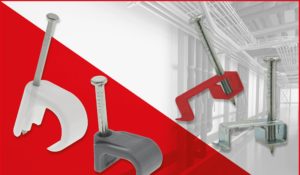
Contractors expect wholesalers to carry a broad and reliable range of cable support options, including:
- Cable ties
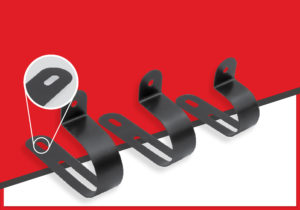
- Cable cleats
- Cable clips
- Cable tie accessories
- Cable glands
Products such as Unicrimp metal cable cleats and Unicrimp brass meter tail glands are examples of items that help installers meet compliance requirements while ensuring long‑term system integrity.
The choice of fixing depends on:
- The installation surface (e.g., clips for timber, ties for basket tray)
- The cable type (e.g., cleats for SWA cables)
Wholesalers who understand these distinctions can better support their customers and strengthen their technical credibility.
Guidance contractors rely on
The IET On‑Site Guide (OSG) remains a key reference for installers. Appendix D provides recommended spacing for cable supports, with Table D1 detailing distances for accessible cable runs.
For example:
- A cable with a diameter up to 9 mm requires closer clip spacing
- Larger cables can be supported at greater intervals
Wholesalers who understand these guidelines can help contractors select the correct quantity and type of fixings – improving customer service and reducing returns.
Bending radii are also critical. Regulation 522.8.3 requires cables to be bent without placing strain on internal conductors. The OSG’s Table D5 gives examples, such as the minimum bending radius for 1.5mm² twin and earth.
Cable entry: a common point of failure
Wholesalers frequently supply the accessories that prevent damage at cable entry points.
Two issues must be addressed:
- Sharp edges on metal boxes – requiring grommets or bushings
- Strain on terminations – requiring proper support and compression glands
Stocking the right glands, grommets and strain‑relief products ensures installers can meet Regulations 522.8.5 and 522.8.12.
What this means for wholesalers
Electrical wholesalers are a vital link in ensuring safe, compliant installations. By offering a comprehensive range of cable supports – and understanding the regulatory drivers behind them – wholesalers can:
- Help contractors meet BS7671 requirements
- Reduce installation faults and call‑backs
- Strengthen customer trust
- Increase sales of complementary products
Unicrimp’s extensive range of clips, cleats, ties and glands gives wholesalers the opportunity to supply everything a contractor needs to install cables safely and compliantly.
Further details can be found here
Find more industry features here